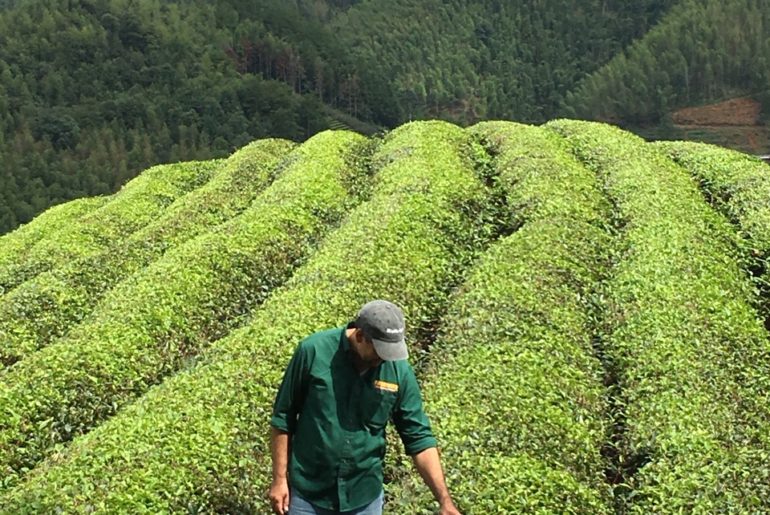
At Tong Mu Village, where the original Zhengshan Xiao Zhong was made and later became known as the Lapsang Souchong in the West. As foreigners are not allowed to go into this region, we had to get a permit, and Mr. Zhang, the villager who makes the tea, had to run around 11 times to get the government officials to agree. You see, from sheer effort alone, we know there are zero real Zhengshan Xiaozhong out there. So let’s let those teas continue to be called Lapsang Souchong- what the villagers don’t know, won’t hurt them right? They don’t know that people send smoke into low quality black tea to create that pine smoke flavor, or how possibly carcinogenic that is. They don’t know that although they make some 300-500 lbs a year for the entire village, worldwide there are literally a ton of Lapsang circulating the globe. Why did…
Notes from the Field: Tea Adventures Nine Bend River
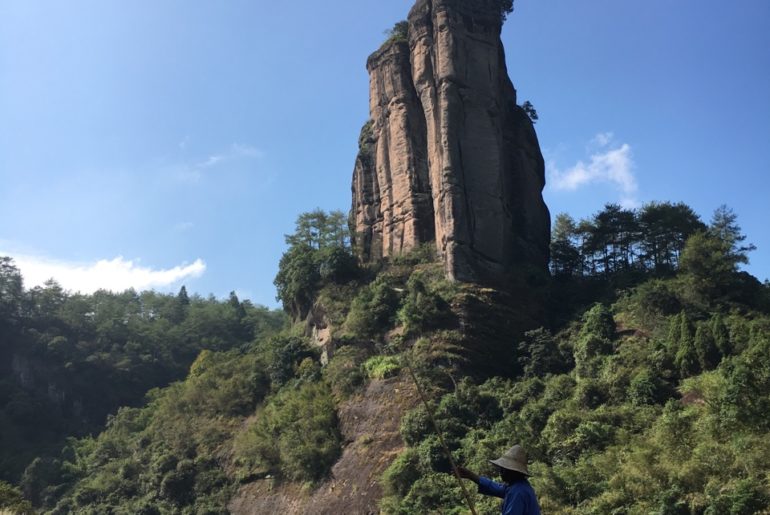
It’s not bad to be a tourist at Wuyi, rafting gently down the Nine Bend River that carries you in sight of all the unique rock formations that are Wuyi Shan. Vegetation, and tea bushes for that matter, often grown stubbornly atop these bare, bold rock surfaces. One can appreciate just how much strength is needed to extract minerals out of these rocks, to fight for the trickles of water that might descend, and to produce tea leaves. Even more amazing, who picks and harvests these leaves? Local harvesters do not have harnesses for rock climbing, and it’s not a sport. Given this perspective, one can glimpse the value and uniqueness of the teas from this region, particularly the truly cliff grown teas!
Notes from the Field: Tea Adventures Old Grove Shuixian
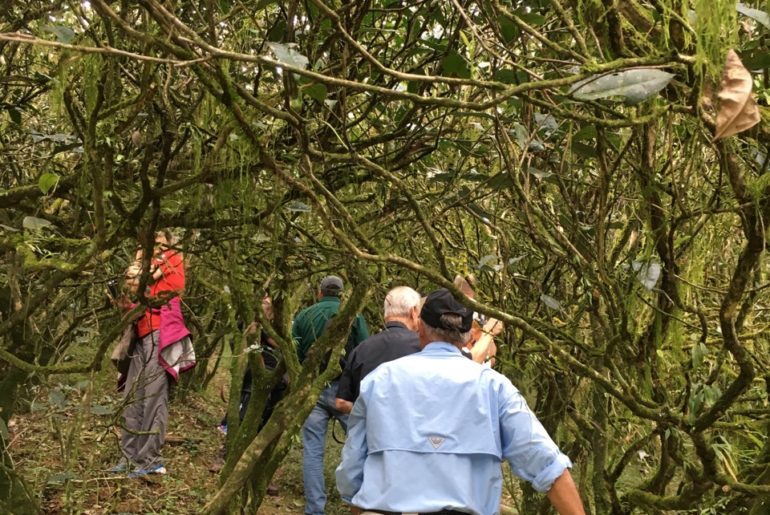
Into the Old Grove: visiting some of these knarly old trees in the region helps us understand that the best oolong varietals all originally came from these arbor type Shuixian trees with the Phoenix beak like leaves. Technically one can make any of the types of teas with any varietal, but the buds mature into larger leaves quickly and the larger, two leaves and a bud configuration with a high concentration of aroma oils is most suitable for oolong making. And the intense fragrances that the producers elicit from this varietal is unmatchable.
Notes from the Field: Tea Adventures Wuyi Mountain
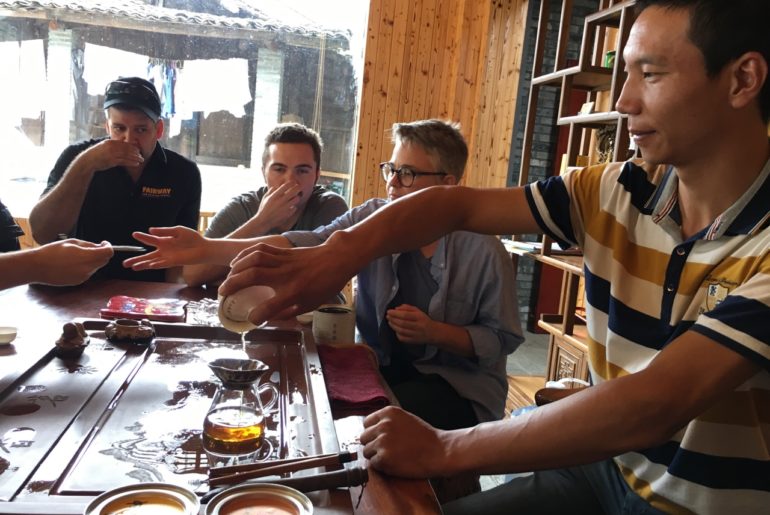
The origins of Wuyi Rock oolong: Shuixian. First, there were one of the few extant species of arbor type teas in the world, the mid size leaf tree type Camellia Sinensis called Shuixian. Successfully propagating Wuyi Mountain area after Phoenix Mountain, the trees were later differentiated by subspecies into various famous groves, or Ming Cong, such as Water Golden Turtle, Dahongpao. From green leaf to black dragon, one of the most profound teas in the world will be explored in depth by our fellow tea aficionado tour group. Today: perfect fall weather, last day of production, and of Rougui oolong. Took them into the wild Old Groves Shuixian forest.
The art of judging award-winning tea
How are award-winning teas selected? Surprisingly for most people, tea competitions are fun and exciting. Judges typically consist of tea farmers, tea shop owners, and tea scholars. These experts are known for refraining from drinking alcohol and coffee, smoking, eating spicy food, or anything else which could taint their palate. Gathered around a large table, with tasting spoons in hand, the group obnoxiously slurps down countless sips of the same type of tea, crafted by different artisans. Traditionally these teas are oolongs. With greater expertise and experience required for production, oolongs are said to be the “connoisseur’s tea,” containing the most complexity and fragrance. Judges debate taste, aroma, appearances of leaf, and quality of infusions. After several hours of heated debate, with judges literally shouting and screaming at one another, a consensus on which teas deserve which grades is finally reached. Judges award 1st, 2nd, and 3rd place honors. Unlike…
Pairing Teas with Food
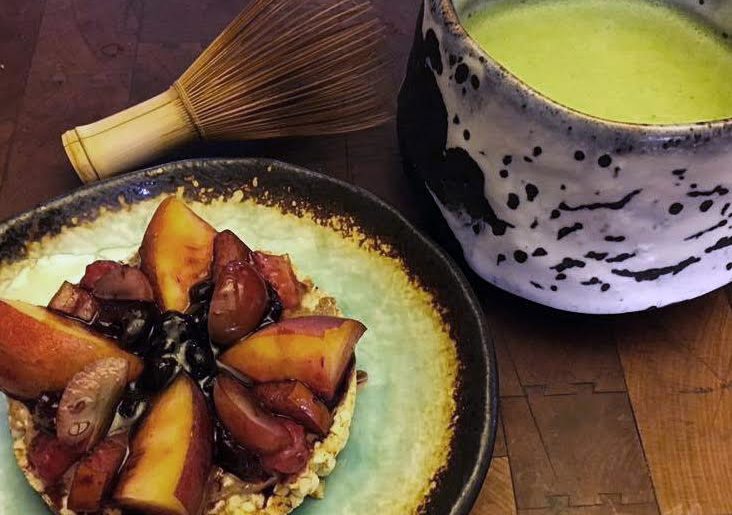
In ancient times, the Chinese thought of tea as the perfect beverage to pair with food when it came to health options and balancing what went into their systems. Tea cuts oil and fat, helps digestion, and then, detoxes the liver — Not a bad item to ingest even today when eating meals like dim sum that consists of fatty pork, high cholesterol seafood, or even some questionable fermented fish. The Chinese strived to always eat very balanced meals, however, sometimes one is not in a position to do so. In the case of the ancient Tibetans, where their diet was high in animal meats and vegetables were unavailable, they relied on drinking tea with their meals to help with digestion. Tea was also considered to be quite effective against alcohol toxicity, so the Mai Tai drinker would finish off their binge with tea, to regain functionality. Tea has been a functional…